Why I built We IBD
Five years ago, I was diagnosed with IBD (inflammatory bowel disease). Like a lot of people, that diagnosis came as a real shock. From one day to the next, I found myself with more questions than answers.
Even though the diagnosis was hard to accept, the illness wasn't entirely unfamiliar to me. That was when I remembered my Grandma and all the little bits of care she put into what she ate. I can still picture her carefully peeling her tomatoes and taking out the seeds. As a child, I didn't understand why she did it. It was only many years later that I realised those small habits were simply part of her daily life, her way of trying to live better with the illness.
At first, you look for answers everywhere. With every flare-up, you wonder what set it off. Was it that meal? That drink shared with friends? Stress? A bad night's sleep? You go back over everything you did, trying to find an explanation.
And then, almost without noticing, the guilt sets in. You start to fear certain foods. You hesitate before going out to a restaurant. Sometimes you turn down an invitation because you don't know how your body will react. You read articles, you listen to everyone's advice, you try different approaches... and despite all your efforts, the symptoms sometimes come back for no obvious reason.
Over time, I understood that there is no miracle cure. Every case of IBD is different. What works for one person won't necessarily work for another.
But I also understood that it's often small, almost trivial habits that can make the difference. Like my Grandma's careful gestures, each of us gradually learns which foods we tolerate better, which are best avoided during certain periods, and the impact that stress, sleep or fatigue can have. That path takes time, patience and a lot of listening to yourself.
But memory has its limits. Between two appointments, the weeks go by. You forget when the symptoms started. You no longer remember exactly what you ate or what happened in the preceding days. And yet it's often those small details that help you understand your illness better.
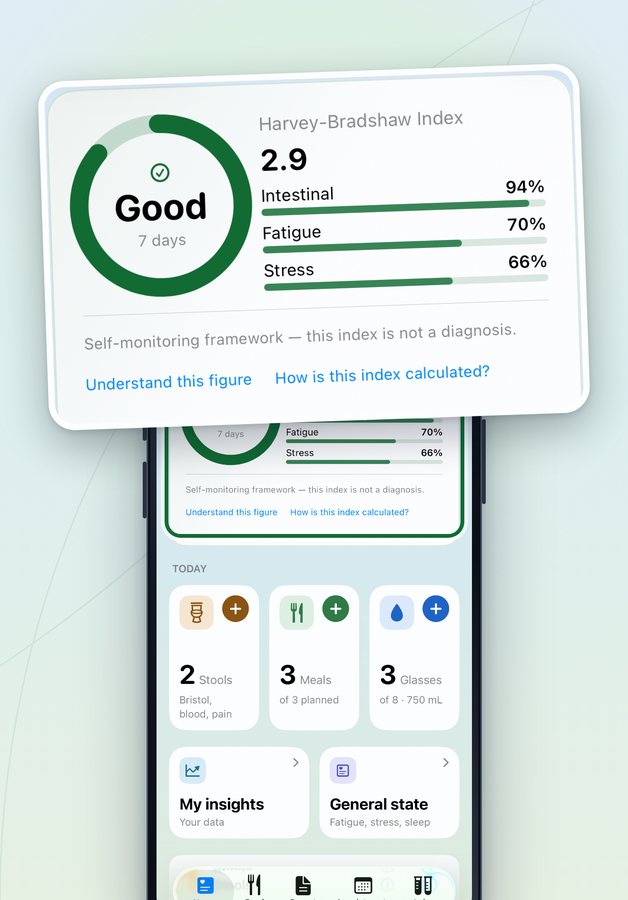
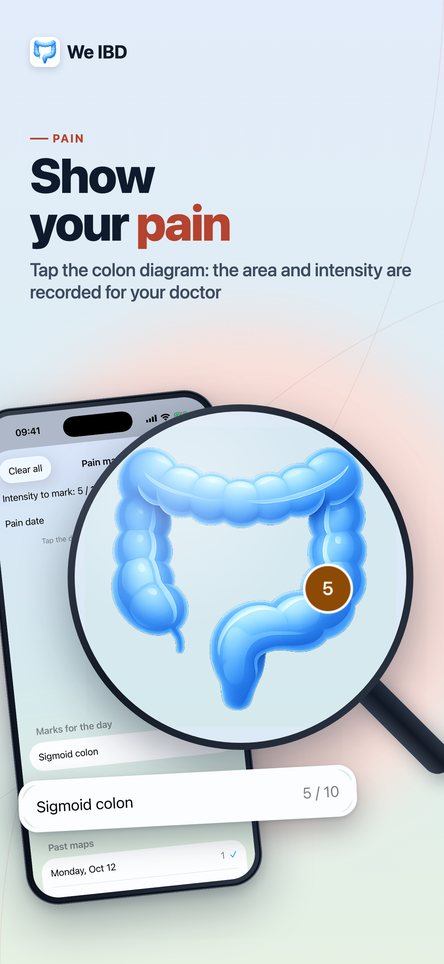
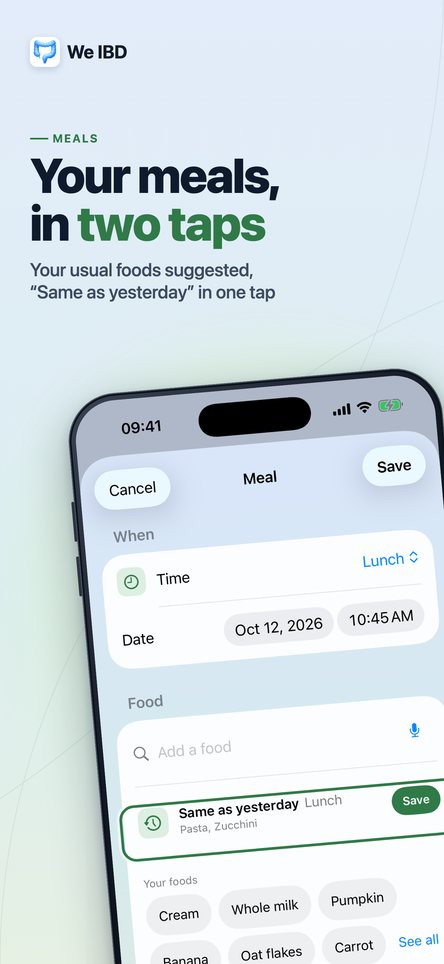
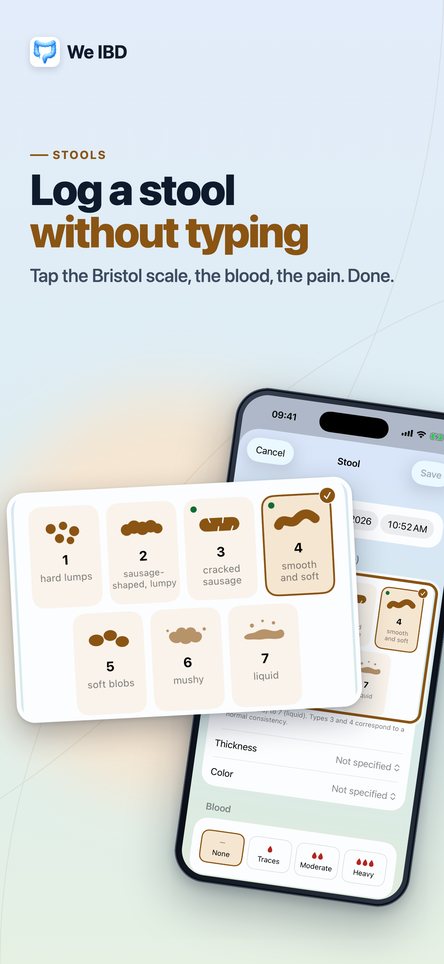
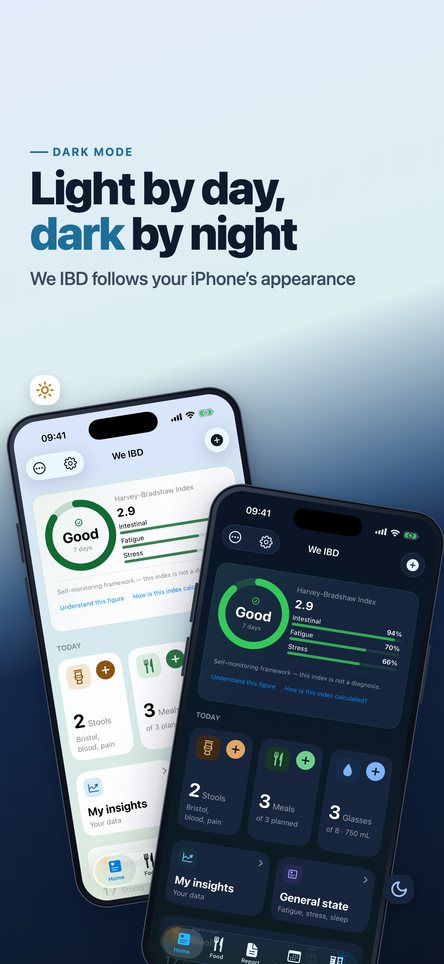
We IBD was born out of that experience. I wanted to create the app I would have loved to have from the start. A simple place to note your meals, your symptoms, your sleep, your stress level, your energy, or simply how you feel. Not to find immediate answers, but to step back. Because over the weeks and months, you sometimes start to see habits, connections or triggers appear that you would never have noticed otherwise.
We IBD is not meant to replace a doctor or to make diagnoses. Its purpose is to help you better understand your own journey and to have a clear history you can share with your gastroenterologist if you wish.
Privacy was essential to me. Living with a chronic illness is personal enough already. That's why your data stays on your device. No account to create, no cloud storage, no advertising at all. It's simply yours.
Today, I too am still learning to live with my IBD. I don't have all the answers, and I don't think anyone does. But I've learned that you shouldn't try to control everything. You have to learn to listen to your body, accept that every journey is unique, and move forward one day at a time.
If you recognise yourself in these few lines, then I hope We IBD can be there for you. Because at heart, this app was born from the same thing as your journey: the wish to understand your illness better, so you can live with it rather than against it.
Werner Masseglia
Founder of Wewe apps